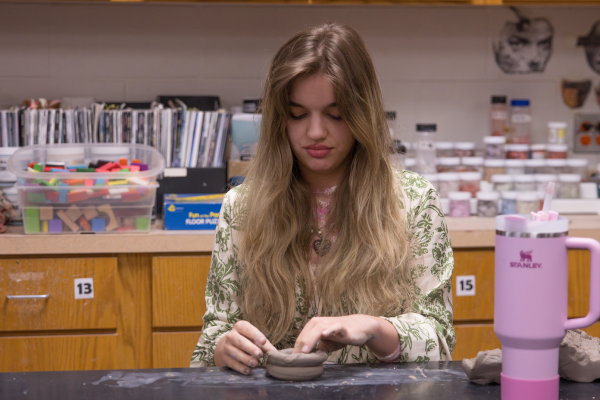
A feeling of achievement spreads through senior Anneliese Robertson as she completes the final stitch in her project during her AP 3D art class. Throughout the 2025-26 school year Robertson, along with her peers, has been perfecting her AP 2D and 3D Art portfolios to submit in hopes of earning college credit.
“AP Art impacts me because it allows me to express myself in a [creative] medium,” Robertson said. “Sometimes words don’t work in the way that you want them to, so if you can show how you’re hurting or how you feel about a topic, you can be a lot more emotional with telling it.”
Robertson’s portfolio covers the objectification of women in the eyes of society and the expectations placed on young women because of traditional gender roles.
“I feel like I really have to apply myself to beauty standards,” Robertson said, “but it transformed into something that I feel like has more meaning to myself because I undergo a lot of pressure from my family and from people in society. I feel like I wanted to express that in art.”
AP 3D art students typically make five to six pieces of artwork throughout the school year. They completely research their topics through a sustained investigation and each piece tells a new story.
“I chose 3D art originally because I really like sculpting with clay,” Robertson said. “I think it really shows how life will treat you. You can plan stuff, but it won’t turn out like the guidelines.”
Robertson continues to create new pieces for her portfolio, including a mask, dress and even a cake. Each participant in AP Art creates unique pieces unlike those of anyone in the class.
“You get very attached to pieces, and it can be disappointing when they don’t turn out the way that you envisioned,” Robertson said, “but you’re there from the beginning to the end and you’re hands on the entire time, so it’s kind of like making something new out of nothing.”
AP art allows students to use different mediums including clay, fabric and whatever else the artist needs to bring their creative vision to life.
“My favorite medium is sewing,” Robertson said. “A lot of my projects have sewing involved in them, and you can kind of zone out when you’re sewing.”
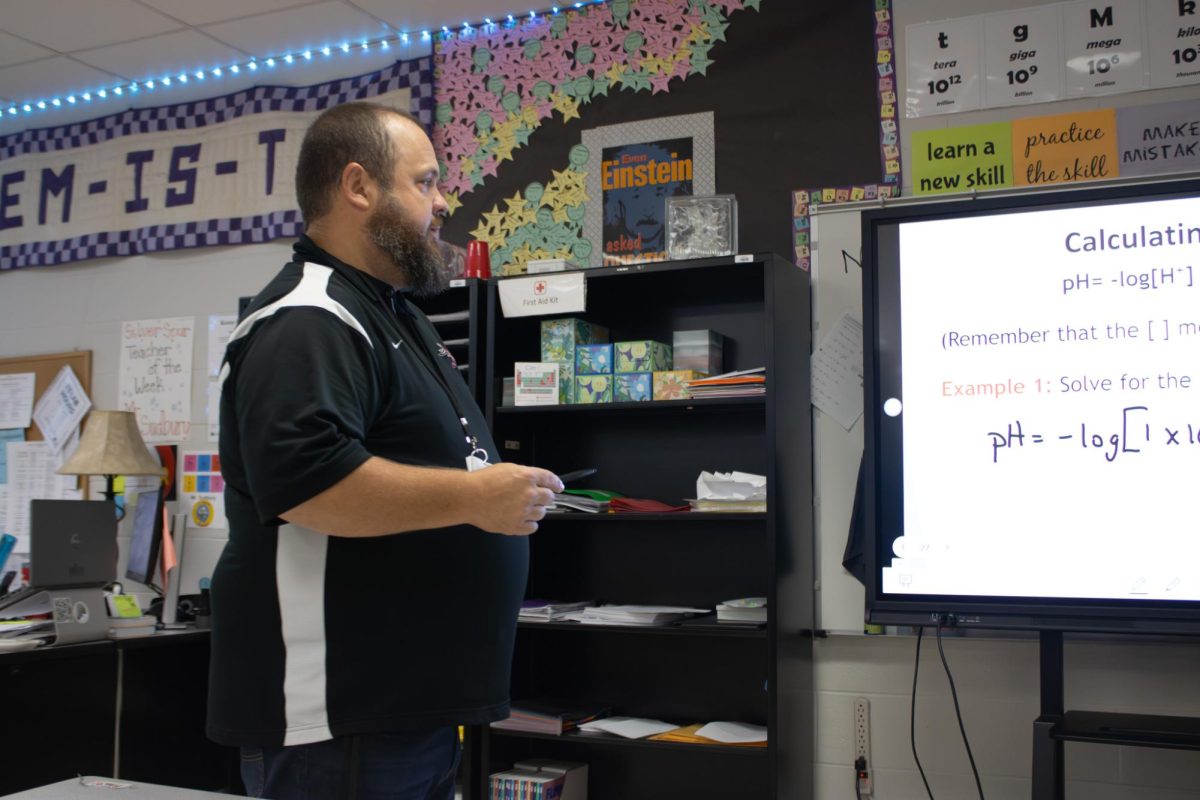
Though the portfolios serve as an individual expression, members of the class work together and with their teacher, Mr. Shane Skinner.
“I feel like [other AP Art students] push me to be better,” Robertson said. “If I make a piece and I look across from me and see one of my friends has done a piece that’s gorgeous, it makes me not want to settle for ‘all right’.”
Students in AP 2D art, such as senior Kiley Bartlett, follow a similar set of practices to plan and create their portfolios. The largest difference between AP 3D art and AP 2D art can be seen in the mediums used. While 3D art creates sculptures, 2D art creates paintings and drawings.
“[AP Art is] a highlight of my day,” Bartlett said. “It’s something that has definitely made me look forward to art school in my future and has probably cemented my path to being an artist.”
Bartlett’s portfolio focuses on her struggles with mental and physical health, especially with the many different treatments and medications provided by doctors.
“[My favorite piece is] my oil painting of a dirty fish tank,” Bartlett said. “It has all the components to be clean and for the fish to be taken care of. However, it is not and it still has an algae bloom. The fish inside of the fish tank is a beta. There’s like a myth that they can just live in a puddle. They don’t need much to survive even though they deserve as much care as another, like a goldfish.”
Bartlett plans to create 11 pieces for her portfolio. AP 2D art students typically create 10 pieces throughout the year.
“[My peers] give me advice and help me pick out colors, help me make sure that my projects look okay and we bounce ideas off of each other,” Bartlett said.
Both 3D and 2D art prepare students with advanced skills that can transfer to jobs in the professional field.
“I want to be a concept artist,” Bartlett said. “I want to create what characters in movies and video games are going to look like.”
Students put in hours of work every week to turn their portfolio into a representation of their artistic capabilities. They must be dedicated to the creation of their pieces to complete their portfolio in time for AP submissions.
“It’s very easy to slack off,” Robertson said. “It takes a lot of motivation, but I think it’s a good challenge for people who want to try something new and really grow as an artist or just try something with their hands for once.”