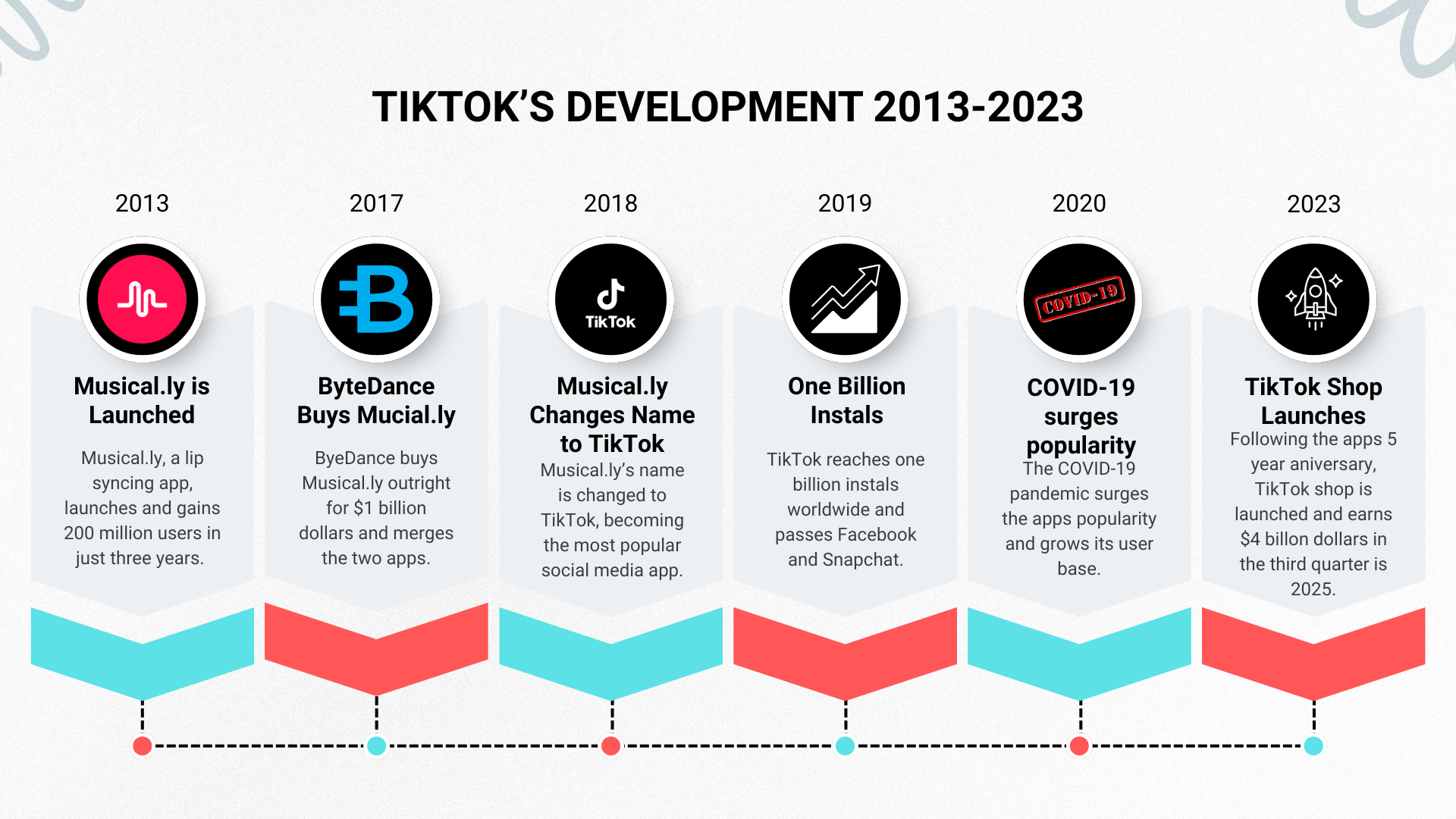
Since the establishment of TikTok, it has amassed a platform with 1.59 billion users and the most downloads of any app in the App Store, with 5 billion downloads. TikTok became the biggest force in the digital economy, generating about $23 million in revenue in 2024. The exposure it brings to the world is something to be studied:
Since its rise in 2019, it has held the spot for the No. 1 app in the App Store. With the explosion in downloads, it became a platform for billions of people to share their daily lives. It features creators anywhere from lifestyle creators to scientists and mathematicians. Certain creators earn money from their posts, allowing them to make a living on just TikTok alone. TikTok also provides a space for others to find “their people.” A popular nickname, given to different areas of the app, all nicknames ending in “Tok”, to create a certain area of content, for example, people who like books can search “BookTok” and access billions of videos in their niche. It became an area for others to feel seen.
The app also helps spread diversity, as Professor McLean says. Videos are being posted from major cities and small rural towns. Every single country in the world has at least one person using TikTok. It helps connect people from opposite sides of the world and it helps those connections flourish.
Yes, the app is the most downloaded in the App Store and has millions of users monthly, but is that really a good thing? Is being exposed to billions of other people’s lives beneficial to anyone? The answer is no. The answer boils down to one thing: the effect on mental health. Mental health, specifically in developing minds, remains one of the most dealt with issues in the world, so why would we praise an app that contributes to destroying it?
Let’s dive deeper into TikTok’s effect on teen mental health:
During the COVID-19 pandemic, the world shut down. Meaning, no more hanging out with friends every day, no more going to school, and most importantly, no social interaction. During this time, TikTok rose because it became a way for children to cope with the loss of social interaction. OK, so how is this bad? Well, in the beginning, it wasn’t because that was one of the
only ways to contact friends and family. However, after the pandemic, when we were allowed social interaction, people continued to use TikTok as a coping mechanism. But coping with what? People were becoming addicted to apps, addicted to the idea of what their life “should” be like. This addiction led to increased symptoms of depression, self-doubt and social anxiety in young minds. When growing up, the mind must be shaped in the right ways. Young minds need real human interaction. They need to make friends and interact with others. While it was a way to cope during the pandemic, it was only useful for a short amount of time. Studies show that young and developing minds have an increased need for real human interaction.
The addiction to TikTok should be slowed by implementing screen time, app limits and no longer romanticizing others’ lives. By bringing these practices into our lives, feelings of depression and self-doubt will slow, and the world’s mental health can start improving.