According to the National Institutes of Health, one in three adolescents aged 13-18 will experience an anxiety disorder. In a poll posted on “The Rider Online” Instagram, 108 out of 164 students responded stating that they struggle with anxiety. Junior Isabella Clark battles anxiety as part of her daily routine.
“I noticed I started to feel anxious around kindergarten,” Clark said. “I would throw up in the morning before school. It got worse over the years, but I started counseling and that helped for a little bit.”
Anxiety looks different for everyone. Some disorders include specific phobias, social anxiety disorder, separation anxiety disorder, agoraphobia, panic disorder and generalized anxiety disorder. This differs from the everyday anxious thoughts, which resemble worry, as anxiety disorders are labeled as excessive fear of anything and everything. 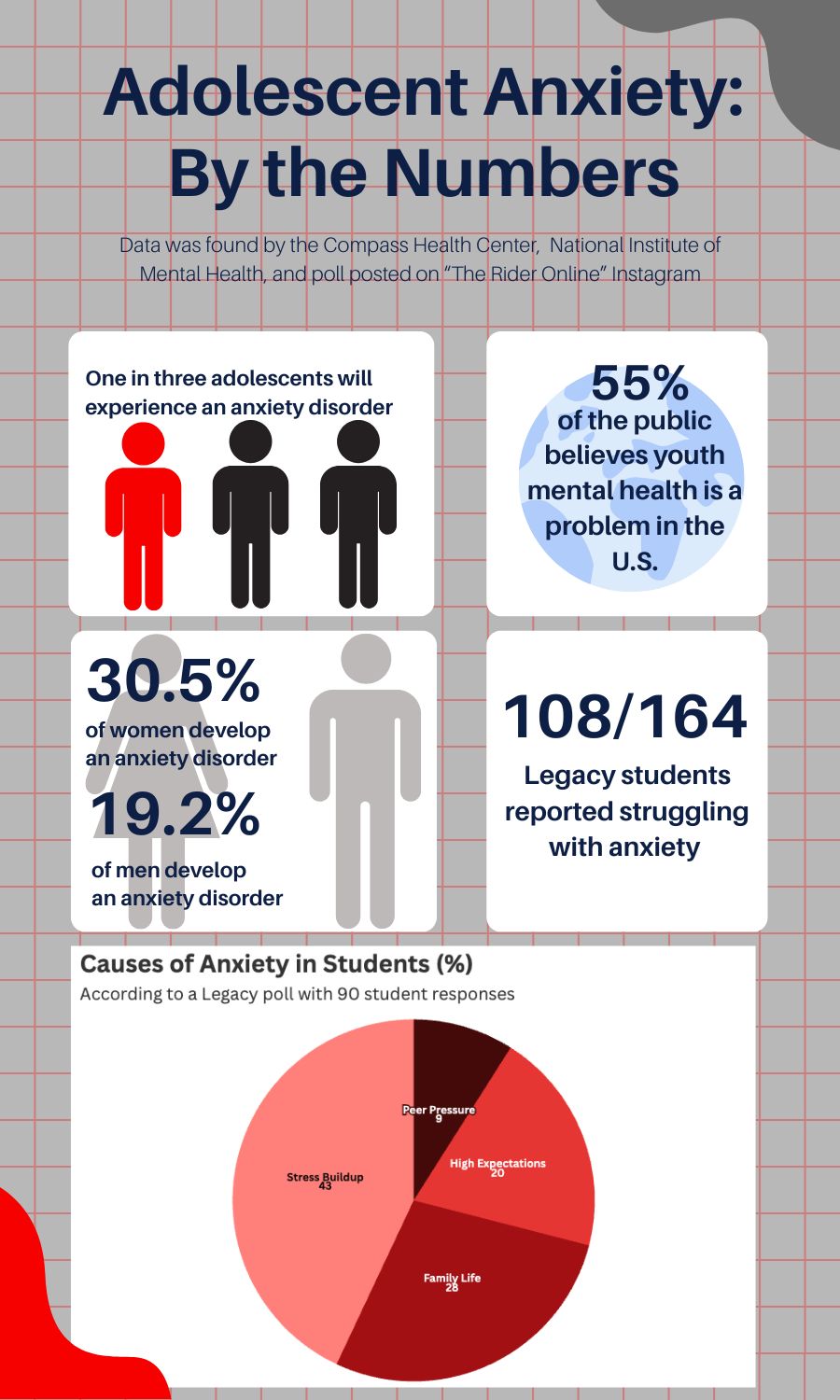
“I am living in a constant state of fight or flight. So if you were being chased by a bear, I feel like that if someone makes a loud noise,” Clark said. “This makes me very tired because my brain is working so hard to remind itself that I am safe.”
Symptoms come in a wave of physical, mental and emotional changes. Some personality signs of anxiety disorders include recurring fears about routine aspects of life, changes in behavior, avoiding activities and trouble concentrating.
“My anxiety makes my chest feel tight. It makes my head hurt and makes me feel like I am stuck in a tunnel. I get shaky and my mouth gets really dry,” Clark said. “My anxiety affects my everyday life because it makes me very tired by the end of the day and also affects things that I do.”
The Bold Health Inc. found that social anxiety remains the most common among teenagers, affecting 9.1% of U.S. adolescents. Junior Joshua Watkins moved to Mansfield in eighth grade and struggled to build relationships as the “new kid.”
“It makes me emotional because I hide it from everyone else. I’m too worried about getting put down or getting rejected,” Watkins said. “[It’s hard] getting in a relationship with someone or trying to become friends with other people.”
Researchers said the increase in social pressure and high expectations contributes to the onset of anxious behaviors in teenagers. In a poll posted on “The Rider Online” Instagram, when asked the question, “which cause best applies to you?” and given the choices “Family Life,” “Peer Pressure,” “High Expectations” and “Stress Buildup,” 43% of students responded “Stress Buildup.”
“I try to explain everything, but I’ll stutter, or I don’t have the choice of words to try to explain it to people,” Watkins said. “It kind of makes me a little bit slow and stressed, and I overthink everything. But I’m slowly, slightly overcoming it.”
When battling anxiety, two main treatments remain – psychotherapy and medication. Results can vary depending on the person and the severity of their disorder, but Mayo Clinic said psychotherapy remains the safest treatment, as medication can carry side effects.
“I found that being on anxiety medication helps a lot, but I have other strategies that help. I do deep breathing and a strategy called butterfly taps,” Clark said. “I also have a few friends who know about my anxiety that I talk to. Talking really helps get my mind off of what I am anxious about.”