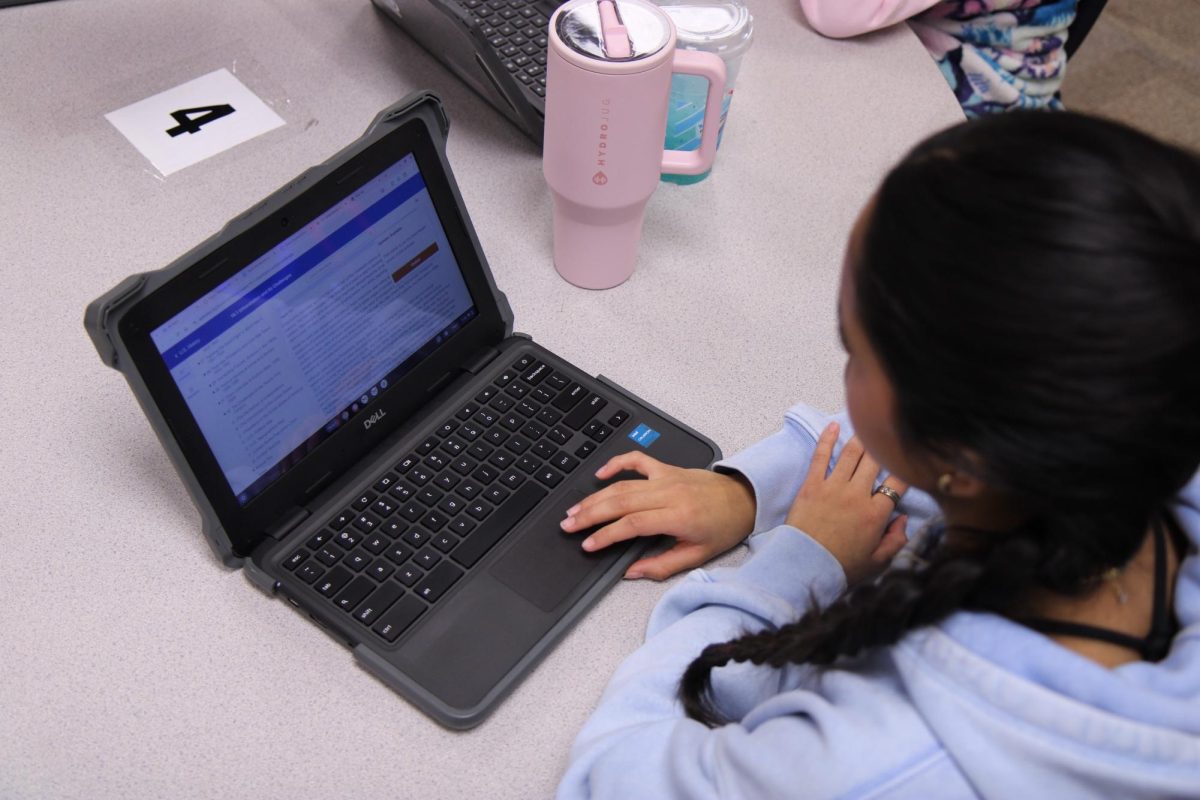
During the spring semester of the 2025-26 school year, MISD announced changes for the TCC Dual Credit program, including several courses switching to an online format and a policy shift for the 2026-27 school year. Rather than following the MISD “A” and “B” day scheduling, classes will use the Monday/Wednesday and Tuesday/Thursday schedule.
“I think [Dual Credit is] a wonderful opportunity for students,” Ms. Monajami said. “I love that the district offers so many options for you guys to be ready for whatever your next step is, whether it’s college here in Texas or anywhere across the country or internationally.”
TCC classes held online include British Literature, Government and U.S. History. This sudden shift in format causes potential scheduling conflicts, especially when looking for supervisors for the newly online classes.
“They are trying to put together a giant puzzle of a limited number of staff members who are servicing [seven] high school campuses,” Ms. Monajami said. “They have to look at who they have that’s qualified to teach the different courses and travel time availability, all of that kind of stuff.”
As well as the sudden shift to online courses, students must take TCC classes in pairs to avoid interference with regular high school courses. Juniors will only be able to take the pairing of English (English 1301) and United States History (History 1301). Seniors will have the opportunity to take either a pairing of English (English 1301 or 1302) and Government or a pairing of Math and Economics.
“I feel bad because it’s going to limit some of their options, especially the more involved students in extracurricular activities,” Counselor JenniferThomas said. “We’ll have a lot of students that are qualified to take dual credit but won’t be able to because they don’t meet the placements when they’re going to be able to offer them classes.”
TCC will also face a reduction in the number of sections offered. This means that students may be unable to take any Dual Credit courses if extracurricular courses cause conflict.
“I personally think that we’re going to have a reduction in dual credit students,” Ms. Thomas said. “A lot of students who are in extracurricular activities are not going to give them up for them to take dual credit.”
Limitations on what courses each grade level can enroll in will also be enforced. Juniors will no longer be allowed to take the Statistics and College Algebra courses, meaning that they must take an AP or on-level math course.
“I would hate for a student to have a gap year in there without a math class just so they can wait to take dual credit their senior year,” Ms. Thomas said. “I’m hoping that it’ll increase the [number of students] that want to take AP courses because I still want them to have the rigor.”
Students who wish to take individual courses may choose to take classes during the summer. If the course taken is part of a paired course, they may be unable to take TCC during the following school year.
“Make sure that you talk to your counselors,” Ms. Thomas said. “I encourage any student to ask questions because there’s a lot that plays into it. We’re trying to guide you the best that we can.”
The scheduling efforts with TCC, while including each high school individually, mostly go through Post Secondary Readiness Coordinator Jennifer Castrillo. She helps make sure that all schools know pertinent information about changes with TCC while also acting as a point of contact for TCC.
“I am very proud of our dual credit program,” Ms. Castrillo said. “I believe dual credit is one of many avenues we provide to students to prepare for their education after high school. I have watched our program grow over the last decade and I hope we will continue to have a strong program for many years.”
Students hoping to enroll in the Dual Credit program must pass the TSI, complete the Pre-Assessment Activity and complete the pre-requisite Canvas courses. The changes to TCC policy may cause difficulties in scheduling, but administrators such as Ms. Monajami remain hopeful for the future of the program.
“Our dual credit students are motivated, eager, know the value of what they’re doing and stay on top of their assignments and grades,” Ms. Monajami said. “I think that most of them will transition pretty well.”